
After many years working with runners, Achilles tendinopathy is one of the most common problems we see. This guide covers prevention, rehabilitation and performance — everything you need to understand and manage this frustrating but very treatable condition.
What is Achilles tendinopathy?
Achilles tendinopathy is an overuse condition where the tendon connecting the calf muscles to the heel becomes painful and loses some of its normal capacity to handle load. It typically develops gradually, often after an increase in running volume, intensity, or a change in terrain or footwear.
Recognising the signs
Common symptoms include stiffness and pain in the Achilles first thing in the morning or after rest, pain that eases with activity but can worsen afterward, tenderness along the tendon, and in some cases a thickened or lumpy feel to the tendon.
Why it happens
Tendons adapt to load, but they need time to do so. A sudden increase in running volume, hill or speed work, inadequate recovery between sessions, calf muscle weakness, and footwear or biomechanical factors can all overload the tendon faster than it can adapt.
Rehabilitation: the evidence-based approach
The strongest evidence for Achilles tendinopathy points to progressive loading exercises — specific calf-strengthening programs that gradually rebuild the tendon's capacity. This isn't about rest; complete rest often allows symptoms to settle temporarily but doesn't build the tendon's tolerance, so pain returns when running resumes. A well-managed program instead balances load reduction with progressive strengthening.
Prevention for runners
- Gradual progression — increase volume and intensity slowly, following the general guidance of no more than roughly 10% increase per week
- Calf strength — a strong, well-conditioned calf and Achilles complex handles running load far better
- Recovery — adequate rest between hard sessions allows tendons to adapt
- Footwear and terrain — sudden changes in either can alter loading patterns
Returning to running
Most runners with Achilles tendinopathy can continue some form of running throughout treatment, guided by a physiotherapist to find the right balance of load. A structured return-to-running program, alongside ongoing strength work, gives the best chance of resolving symptoms and preventing recurrence.
If Achilles pain is affecting your running, book an assessment with our sports physiotherapy team in the Sutherland Shire.
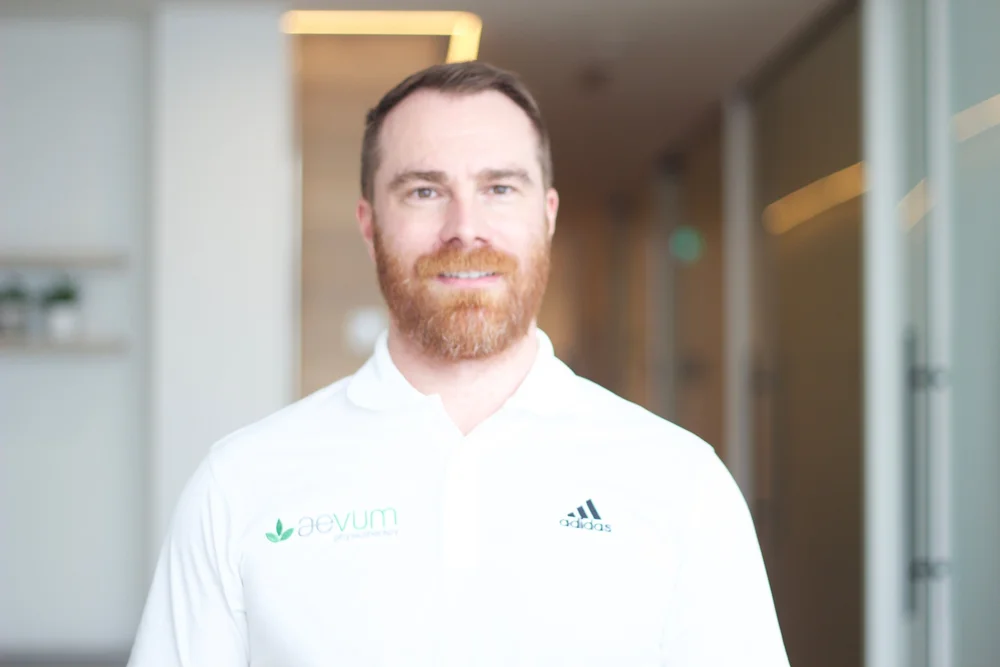
Written by Aaron Babb, MAppSc Physiotherapy — Founder & Director, Aevum Health & Physiotherapy.