
The most common time to get re-injured is the weeks immediately after returning to running. Not because the original injury wasn't healed, but because the return was built on how long it had been rather than what the body was ready for.
A good return-to-run plan replaces guesswork with structure.
Start with readiness, not the calendar
"Six weeks" is not a criterion. Tissue heals at its own pace, and two runners with the same diagnosis can be ready weeks apart. Before reintroducing running, most people should be able to:
- Walk briskly for 30 minutes with no pain during or afterwards
- Hop on the affected leg repeatedly without pain
- Complete single-leg strength work comparably on both sides
- Get through a normal day with no swelling response
These are general markers. The specific criteria depend on your injury — a bone stress injury has different requirements from a hamstring strain or patellofemoral pain — which is why an individual assessment is worth more than any generic checklist.
The walk-run progression
Reintroducing running works best in measured intervals rather than continuous running. A typical structure begins with short running intervals separated by walking recovery, repeated for a modest total time, on alternate days.
From there, progression can happen in one of three ways — but only one at a time:
- Increase the length of the running intervals
- Reduce the walking recovery
- Increase the total session duration
Changing two variables at once is where most return-to-run plans come undone, because when symptoms appear you can't tell which change caused it.
Alternate days matter too. Rest days aren't wasted time — they're when tissue adapts to the load you've just applied.
The rules that govern progression
Rather than a fixed percentage, let symptoms guide you:
- During the run — mild awareness is often acceptable; pain that increases as you go is not
- Immediately after — symptoms should settle within an hour or so
- Next morning — this is the most informative signal. If the area is more sore than before, the previous session was too much. Repeat the prior stage rather than progressing
- Across weeks — the trend should be improving. Plateaus are fine; a downward trend means the plan needs adjusting
The often-quoted 10% weekly increase is a reasonable ceiling once you're running continuously, but in the early return phase, tissue response is a better guide than arithmetic.
Keep strengthening while you return
A frequent mistake is stopping rehabilitation exercises once running resumes. The strength work is what created the capacity to run again — abandoning it while simultaneously increasing running load is how many runners end up back where they started.
Maintain the program alongside your return, and progress it as your running builds.
Where technology helps
For runners who need to restart sooner, or whose injury doesn't yet tolerate full bodyweight, an AlterG anti-gravity treadmill allows running at as little as 20% of bodyweight — normal running mechanics at a fraction of the impact, with the percentage increased progressively as healing allows. It's particularly valuable after bone stress injuries and post-surgical recovery.
Where a recurring injury suggests a mechanical driver, 3D running gait analysis provides objective measurement of how you move.
When to get help
Build your own plan if the injury was minor and settling predictably. Get an assessment if the injury was significant, if you've had more than one failed attempt to return, if you're returning after surgery or a bone stress injury, or if you're unsure whether what you're feeling is normal.
Our running physiotherapy team builds individual return-to-run programs for runners across the Sutherland Shire.
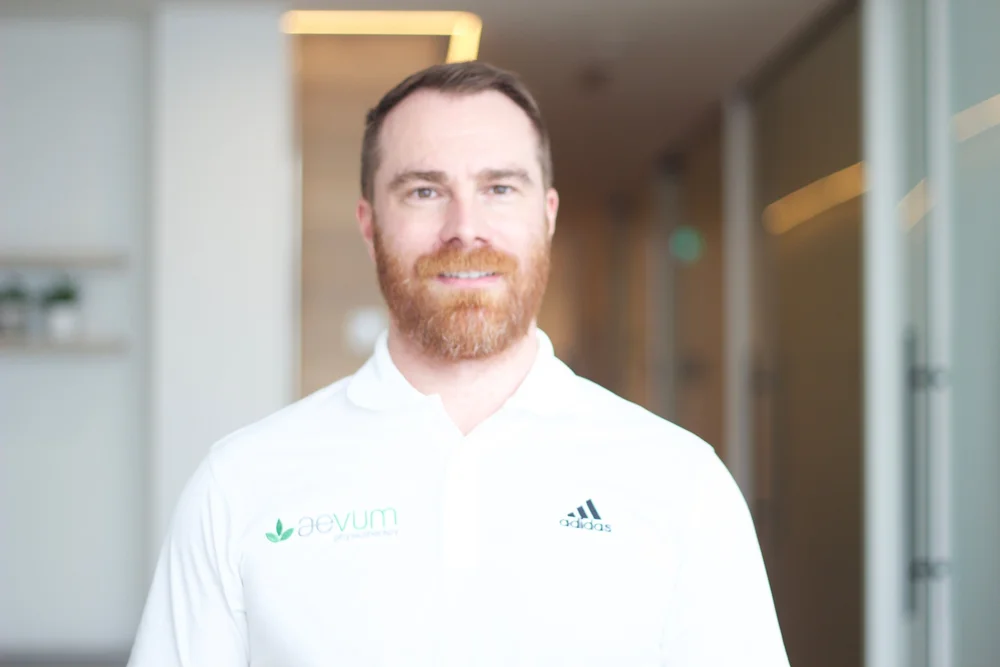
Written by Aaron Babb, MAppSc Physiotherapy — Founder & Director, Aevum Health & Physiotherapy.
Dealing with a running injury, or want to run more efficiently? Our running physiotherapy team assesses runners of every level across the Sutherland Shire.
Running physiotherapy →