
Returning to running safely after injury means two things working together: rebuilding your load gradually, and addressing why you were injured in the first place. Rushing straight back to your old distances often leads to the same problem returning. A 3D running gait analysis shows exactly how you move so your physiotherapist can target the specific mechanics driving your injury — not just settle the symptoms. This is general guidance; your individual return-to-running program should always be set with a physiotherapist.
Why runners get injured
Most running injuries come down to two overlapping factors. The first is training load — doing too much, too soon, too often, or without enough recovery. Ramping up weekly kilometres quickly, adding hill or speed work abruptly, or racing on tired legs all pile stress onto tissues faster than they can adapt. The second factor is your individual biomechanics: the way your body moves through each stride. Two runners can follow the same program and one stays healthy while the other breaks down, because their movement patterns load the body differently.
Understanding both sides matters. If you only manage the load but never look at how you run, the underlying pattern that contributed to the injury is still there waiting for the next training block.
The principle of graded return to load
Tissue heals and adapts when it is loaded progressively — enough to stimulate change, but not so much that it becomes overloaded again. In practice, a return to running is usually built around a graded progression: often beginning with a walk-run approach, where short bouts of running are alternated with walking, then gradually increasing running time as the tissue tolerates it.
Volume is managed carefully over weeks, with running frequency, distance and intensity nudged upward one variable at a time rather than all at once. This is a general principle rather than a prescriptive plan — the right starting point and rate of progression depend on your injury, your history and how your body responds, which is exactly why an individual program should be set with your physiotherapist.
What 3D running and gait analysis measures
At Aevum's Kirrawee motion-capture lab, our 3D running analysis captures how you actually move while running, in detail the naked eye can't reliably see. Using motion-capture technology, the assessment measures things such as:
- Cadence — how many steps you take per minute.
- Foot strike — how and where your foot contacts the ground.
- Joint angles — what your hips, knees and ankles are doing through each phase of the stride.
- Asymmetries — differences between your left and right sides that can concentrate load on one area.
Together these paint an objective picture of your running mechanics, giving your physiotherapist concrete information rather than guesswork about what might be contributing to your injury.
How the findings guide rehab and strength work
The value of the data is in what it lets you do next. If the analysis highlights a low cadence, limited hip control or a marked side-to-side asymmetry, your physiotherapist can build targeted rehabilitation and strength work around those specific findings. That might mean strengthening particular muscle groups, working on running technique, or adjusting how you progress your load. Because the plan is tied to your own movement patterns, it addresses the cause rather than chasing the symptom — and progress can be re-measured objectively over time.
The role of the AlterG anti-gravity treadmill
For many runners coming back from injury, the challenge is finding a way to run before the body is ready to handle full bodyweight. The AlterG anti-gravity treadmill helps bridge that gap by supporting a percentage of your bodyweight, letting you run at a reduced load. This can allow you to reintroduce running mechanics and build tolerance earlier and more comfortably than running on the road, with the support dialled down gradually as you get stronger. Whether it suits your situation is a decision to make with your physiotherapist.
Who benefits from running analysis
Gait analysis is useful for more than just acute injuries. It can help:
- Post-injury runners returning to the sport who want to understand and address what went wrong.
- Runners with recurring niggles — those persistent, grumbling issues that keep flaring up despite rest.
- Plateaued runners looking to move more efficiently and get more from their training.
Here in the Shire, we see plenty of runners logging kilometres along the coast, through local parks and out on the trails of the Royal National Park. Whether you're building back towards a park run or a longer trail loop, understanding how you move helps you get there with fewer setbacks. If you're also curious about your fitness ceiling or cycling, our VO2 max testing and 3D bike fitting take the same measurement-led approach.
Getting started
A running comeback works best when load and mechanics are managed together, guided by objective information about how you move. If you're recovering from a running injury or want to run more comfortably, consider booking a running assessment at our Kirrawee motion-capture lab. Contact our team to find out whether a 3D running analysis is right for you — and remember, any return-to-running program should be tailored to you by your physiotherapist.
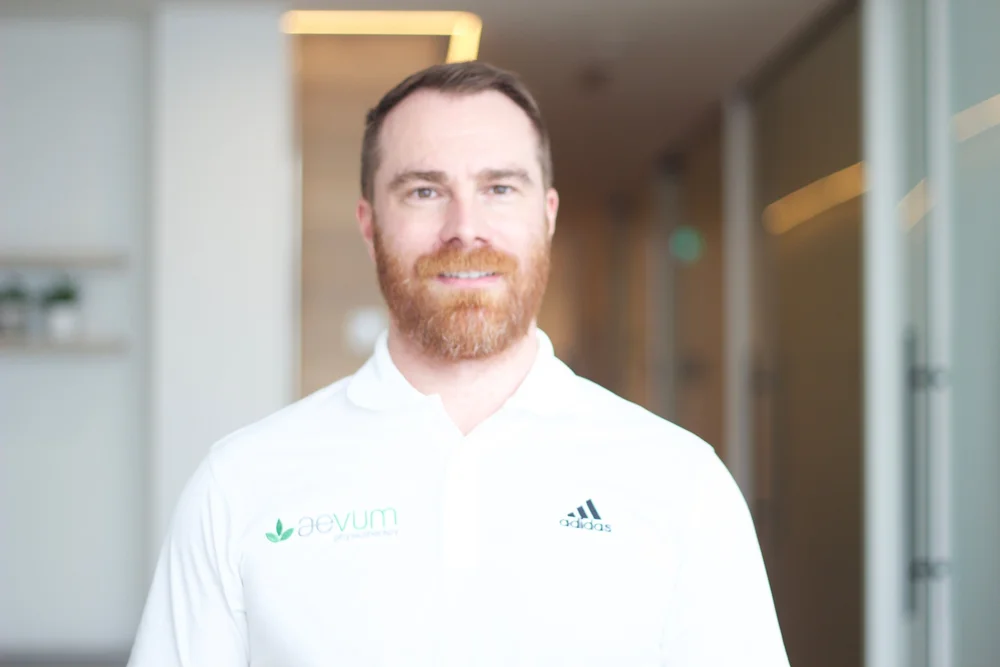
Written by Aaron Babb, MAppSc Physiotherapy
Founder & Director of Aevum Health · Physiotherapist since 2006